Understanding Butterfat Content for Soft Serve

Quick Butterfat in Soft Serve Takeaways

Butterfat is one of the most important factors in soft serve quality. Most soft serve works best between 3–6% butterfat, with premium styles reaching up to 9% depending on equipment and overrun. Butterfat affects texture, flavor perception, freezing behavior, and machine performance, making balance more important than simply using more fat.

Two soft serves can come from the same machine and still deliver completely different experiences. One might be smooth, creamy, and rich, while another feels light, airy, or even icy. In most cases, butterfat is the difference.
Butterfat is one of the most influential variables in soft serve. It affects how the product feels how flavor comes through and how water in the mix freezes. These details matter whether you’re running a high-volume operation or building a premium soft serve concept to take part in the soft serve craze.

Keep reading to learn what butterfat is and how to choose the right level for your menu and operation.
What Is Butterfat (Milk Fat) in Soft Serve?

Butterfat (also called milk fat) is the natural fat found in dairy ingredients like milk, cream, and yogurt, and it is measured as a percentage of the finished soft serve recipe. Despite the name, there is no butter in soft serve; the term comes from the fat portion of cream before it is churned into butter.

In soft serve formulations, butterfat comes from the dairy components used to build the base; Whole milk, cream or yogurt. Even dairy alternatives all contribute some level of “fat”.

Why Butterfat Matters in Soft Serve Performance

Butterfat has a direct impact on how soft serve feels, tastes, and performs, from the first pull of the machine to the last bite in the cup.

Texture & Mouthfeel

One of the most immediate effects of butterfat is how soft serve feels on the palate:

  • Creaminess vs. lightness: Higher butterfat creates a creamier, more luxurious mouthfeel, while lower butterfat results in a lighter, airier product. Neither is inherently better: the right choice depends on the style of soft serve you’re trying to create.
  • Density at higher fat levels: As butterfat increases, soft serve becomes denser and more substantial. Higher density can read as “premium,” but it also affects how the product dispenses and how large a serving feels relative to its volume.
  • Why fat reduces iciness: Soft serve contains water from milk and other ingredients. Butterfat interferes with how that water freezes, reducing the formation of ice crystals. The more fat present, the less free water is available to freeze into crunchy ice, resulting in a smoother texture.

Flavor Perception

Butterfat also changes how people experience flavor:

  • Fat as both a flavor transporter and inhibitor:
    Fat helps carry flavor compounds and extend their presence on the palate. At the same time, it coats the mouth, which can slightly mute how quickly flavors hit your taste buds. The dual role is why fat can both enhance and soften flavor intensity.
  • Why higher fat may need more (or less) flavor:
    In some formulations, higher butterfat requires more flavor to cut through the richness. In others, the fat amplifies aroma and roundness, allowing you to use less.
  • The role of temperature:
    Temperature has a significant impact on flavor perception. Hard-scoop ice cream is served the coldest, which can mute flavors. Gelato is served warmer, allowing flavors to shine—often tasting more intense despite having more butterfat than soft serve. Soft serve, served at the warmest temperature, delivers the most immediate flavor release. In general, the warmer the frozen dessert, the more expressive the flavor.

Typical Butterfat Ranges by Frozen Dessert Type

Frozen Dessert TypeTypical Butterfat RangeNotes
Low-Fat / Frozen YogurtLess than 3%Lighter texture, often relies more on stabilizers
Standard Soft Serve3%–6% Balanced creaminess, smooth texture, machine-friendly
Premium Soft Serve6%–9%Denser mouthfeel, richer flavor, lower overrun
Gelato~6%–8.5%Lower fat than ice cream, served warmer for flavor impact
Ice Cream10%–18%Technically no longer soft serve; scoop-style product

Soft Serve vs. Ice Cream Butterfat

Compared to ice cream, soft serve has a lower butterfat percentage and is designed to be dispensed continuously, which is why formulations above 9–10% milk fat behave more like ice cream than soft serve.

Butterfat vs Overrun: How Fat and Air Work Together

Butterfat and overrun are tightly connected. You can’t meaningfully adjust one without affecting the other, and understanding how they work together is key to achieving the texture, consistency, and machine performance you want from soft serve.

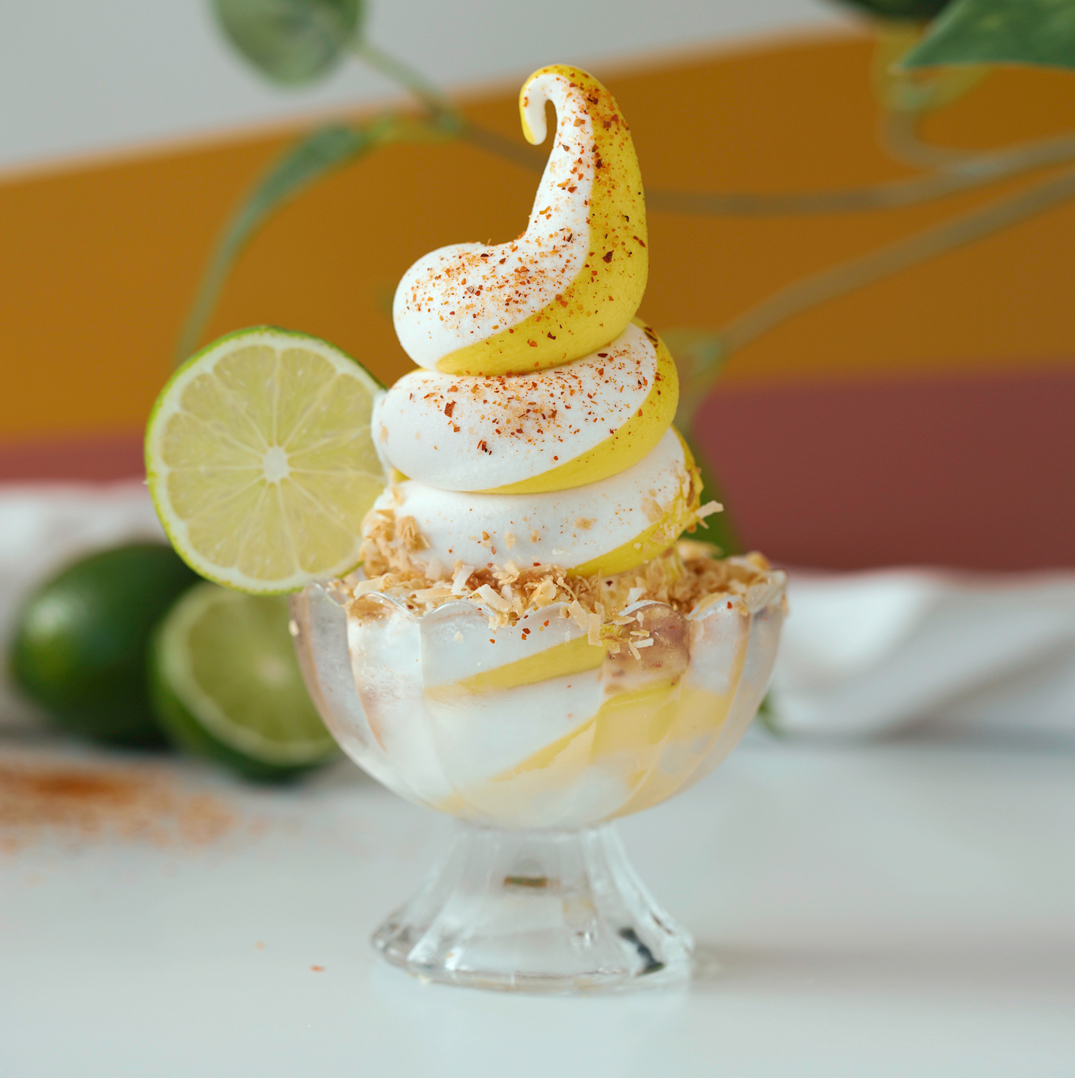
Coconut-Mango-Soft-Serve

What Is Overrun?

Overrun refers to the amount of air incorporated into soft serve during freezing. It’s expressed as a percentage and describes how much the product expands compared to the liquid mix.

In simple terms:

  • More overrun = more air, resulting in a lighter, fluffier product
  • Less overrun = less air, resulting in a denser, creamier product

Overrun dramatically affects density, yield, and perceived value. A higher-overrun soft serve produces more servings from the same amount of mix, but those servings feel lighter. Lower overrun yields fewer servings, but each one feels richer and more substantial. The ideal selection depends on the experience you’re trying to deliver.

Recommended Overrun by Butterfat Level

Because fat and air compete for space, butterfat content naturally limits how much air a soft serve can hold. As butterfat increases, overrun must decrease to maintain stability and smooth dispensing.

Butterfat LevelRecommended Overrun
0–3%Higher overrun
3–6%~30–35%
6–9%~25–30%

Machine Considerations That Impact Butterfat Choices

Even the best-formulated soft serve needs to work within the real-world limits of the machine it’s being served from.

Why Most Machines Don’t Like Butterfat Above ~9%

Most soft serve machines are engineered to handle mixes within a specific fat range. As butterfat rises above roughly 9%, the product becomes thicker, heavier, and more prone to over-expansion during freezing. It becomes harder for the machine to freeze, aerate, and dispense the product consistently.

Once butterfat approaches 10%, the formulation behaves more like ice cream than soft serve, which is why these levels typically require different equipment designed for batch freezing rather than continuous dispensing.

Gravity-Fed vs. Pump Machines

The way a machine moves product into the freezing barrel also matters when choosing butterfat levels:

  • Gravity-fed machines rely on the weight of the liquid mix to flow downward. Higher butterfat mixes are denser and move more slowly, which can limit performance if the product is too thick.
  • Pump machines actively push the mix into the barrel, making them more forgiving with higher butterfat levels and denser formulations.

Altitude Considerations

Altitude can also influence how soft serve behaves, particularly with gravity-fed machines. At higher elevations, reduced air pressure means less force pushing the mix into the freezing chamber. In these environments, very high butterfat mixes may struggle to flow properly, and operators may benefit from slightly lower butterfat levels or machine adjustments made by a technician.

Why Usage Volume Matters

How often a machine is dispensing product can be just as important as the formulation itself. High butterfat soft serve performs best in steady, high-volume environments, where product is constantly moving through the machine.

In lower-volume operations, mixes may sit in the freezing barrel longer and undergo repeated agitation. With higher fat levels, this increases the risk of texture issues over time. Matching butterfat level to expected volume helps ensure consistent quality throughout the day.

Best Butterfat Levels for Different Soft Serve Applications

The “right” butterfat level often depends less on theory and more on how the soft serve will be presented on the menu. Different applications place different physical demands on the product.

  • Dipped Cones: Lower butterfat soft serve performs better for dipped cones because it’s lighter and holds its structure more easily. Higher-fat soft serve is denser, and when inverted, gravity can cause it to slide or fall off the cone before the coating sets.
  • Mix-Ins: Moderate butterfat levels work best for mix-ins. The added density helps inclusions distribute evenly without sinking or separating, while still allowing the product to blend smoothly.
  • Milkshakes: Mid-range butterfat blends most consistently in milkshakes. Too much fat increases the risk of breaking the emulsion (similar to adding too much butter to a hollandaise), resulting in a slightly gritty or uneven texture.
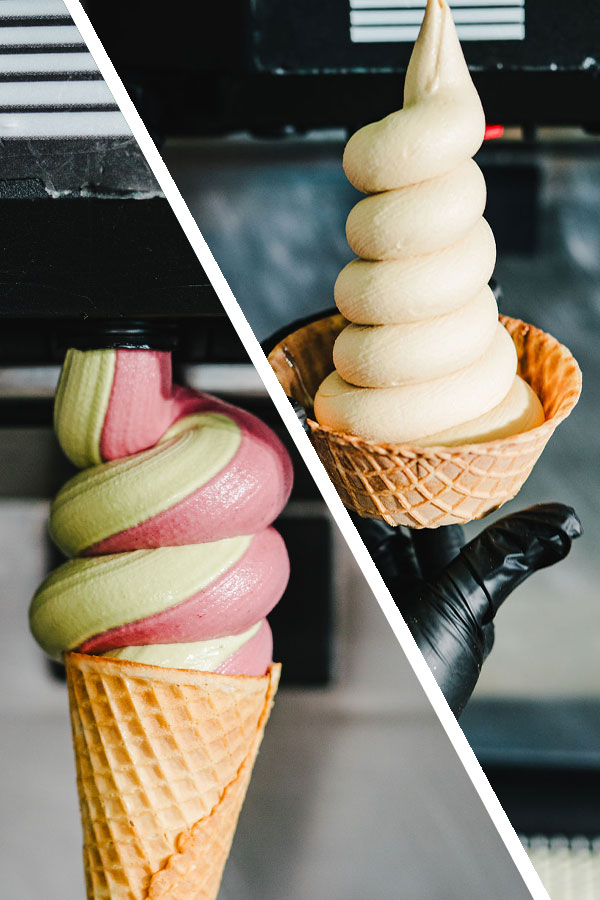
  • Twists & Swirls: For clean, stable swirls, fat parity matters. Products with similar butterfat levels twist together more smoothly, while pairing very high-fat bases with fat-free options can lead to uneven flow. Dairy soft serve can pair well with sorbet or dairy-free bases when their densities are designed to behave similarly.

How Butterfat Impacts Cost, Yield, and Profitability

Butterfat plays a direct role in what soft serve costs to make and how it performs financially.

Ingredient Cost Reality

  • Cream costs more than milk, which makes higher butterfat mixes more expensive
  • Even small increases in butterfat add up quickly across daily production

Portion Size & Perceived Value

  • Higher butterfat creates a denser, more filling soft serve
  • Smaller portions can still feel indulgent and premium
  • Clear pricing and positioning help customers understand the value

Strategic Tradeoffs

  • Less butterfat may require slightly more flavor to achieve the same impact
  • Custard-style soft serve uses eggs instead of milk fat to add richness and stability
  • The goal is balance, not the highest possible butterfat

How Itaberco Helps Customers Choose the Right Butterfat Level

Expert Guidance Based on Your Concept

Itaberco doesn’t treat butterfat as a one-size-fits-all decision. Customers receive guidance based on:

  • Market (family-focused, premium, high-volume, or specialty)
  • Equipment (gravity-fed vs pump machines)
  • Expected volume and throughput
  • Menu vision, including flavors, mix-ins, and serving style

Choosing the right butterfat level isn’t about hitting a single number. It’s about finding what works best for your concept!

Flexible Dry Mixes Designed for Real-World Operations

Our dry, shelf-stable soft serve mixes are designed to be flexible, typically landing in the 3–6% butterfat range depending on the dairy (or dairy alternative) you choose. Operators have room to fine-tune richness and texture without being locking into a fixed liquid mix.

Because our mixes are shelf-stable, they offer clear operational advantages over liquid formats:

Reduced refrigeration needs, freeing up valuable cold storage space

Easier inventory management with no need to store pallets of pre-mixed product

Greater flexibility for lower-volume or seasonal operations

The ability to source your own dairy, making it possible to work with local milk, cream, or alternative bases

FAQs: Soft Serve Butterfat Basics

Most soft serve performs best between 3–6% butterfat, with premium styles reaching up to 9% depending on equipment and volume. artificial dyes.

Butterfat is one of the key soft serve quality factors. It influences creaminess, density, flavor delivery, freezing behavior, and resistance to iciness. However, quality is also shaped by overrun, stabilizers, emulsifiers, temperature, and machine settings.

Yes. Stabilizers and emulsifiers help control texture, water movement, and consistency, especially in lower-fat or high-overrun formulations.

Soft serve mixes commonly include dairy or dairy powders, sweeteners, stabilizers, emulsifiers, and flavor components, with butterfat coming from milk, cream, or alternatives.

Buying soft serve mix wholesale can provide consistent supply, predictable pricing, and scalable quantities for higher-volume operations. Dry, shelf-stable mixes offer added flexibility, including lower refrigeration needs and control over butterfat by choosing your own dairy.

Dial In the Right Butterfat for Your Soft Serve

There’s no single “best” butterfat percentage for soft serve. The right choice depends on how you want your product to taste and feel, how it needs to perform in your machine, and what makes sense for your operation and margins.

Use this guide as a reference as you evaluate your concept, equipment, and menu goals. Ready to put butterfat into practice? Talk with the Itaberco team about choosing a butterfat level that performs for your concept.