 ItabercoItaberco
It was 103 degrees. The kind of heat where the sidewalk gives off its own weather. Which, if you’re going to spend a day eating frozen yogurt across Manhattan, is either the worst possible timing or the only honest way to do it. Heat like that is unforgiving. Is the frozen yogurt actually holding up, or has it melted before you got the shot for your feed? Is this as refreshing as you hoped? Is this line even worth standing in, out in that blasting city sun? Boy, did we have the perfect conditions to taste and test the market.
So that’s what our Sales, Marketing, R&D, and Culinary teams set out to do: Eight stops. One day. No agenda beyond answering one question: is the frozen yogurt movement here to stay, and if so, what’s actually driving it?
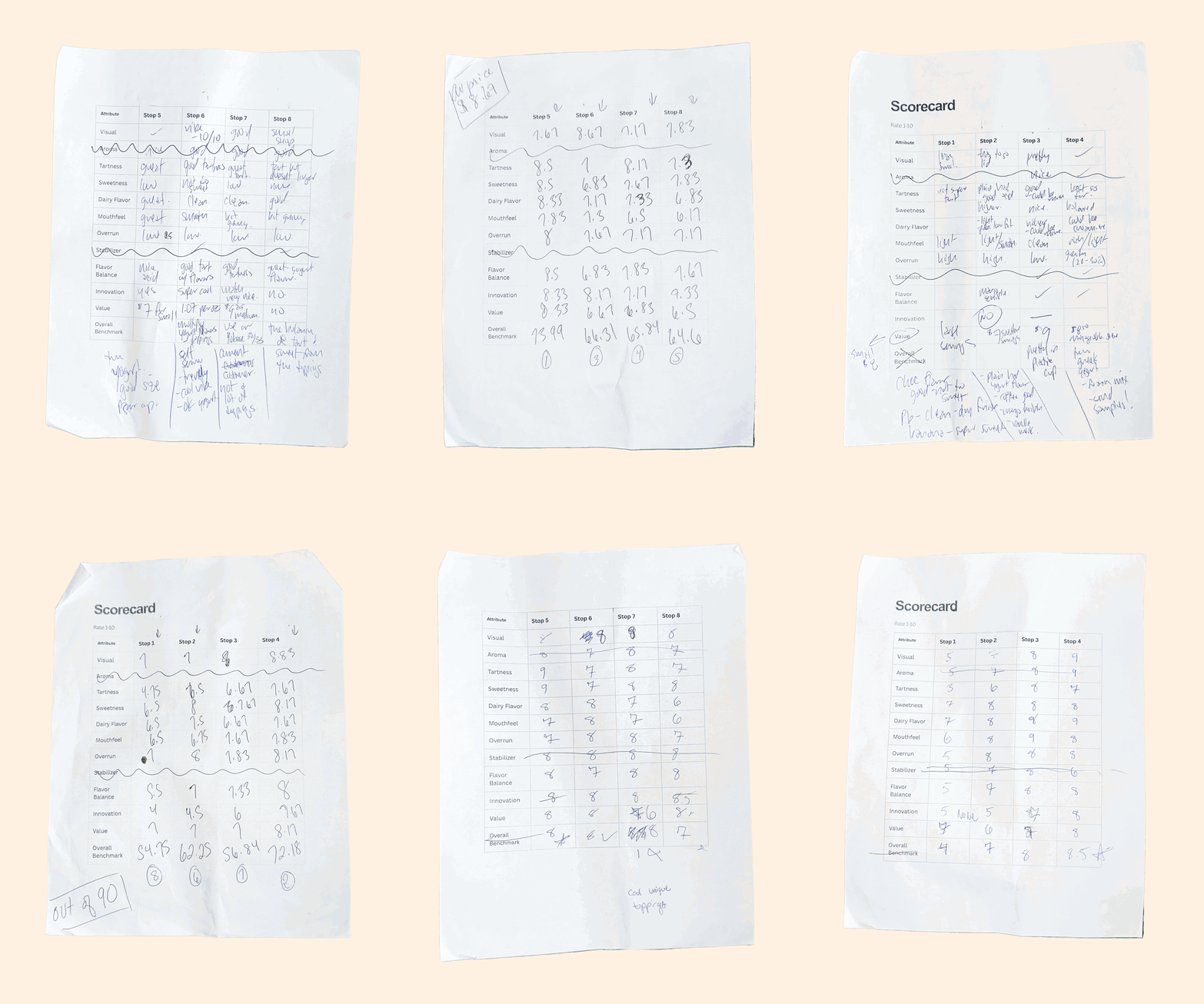
We didn’t want to just say “this one was good.” Flavor is subjective, and a scorecard is only useful if everyone’s using the same language. So at every stop, our team rated each shop with the same analysis we’d use testing our own products, scoring each category on a scale of 10 points:
Does it look like something worth photographing before it melts?
Is there actual balance, or is one doing all the work?
Can you tell it’s yogurt, not just soft serve?
Melt rate, grit, whether it leaves a film on your palate.
How much thought was given to the recipe?
What are you actually getting for the price?
Think about what froyo actually felt like as a kid. Not the flavor. The ritual. A random weeknight turning into an event because mom or dad said yes to going. A wall of flavors and a counter of toppings that felt endless. Pumping the caramel dispenser yourself, like you’d been handed the keys to something. That’s not a minor memory. For a lot of Gen Z and Millennial kids, that was one of the first times a dessert felt like yours, something you designed, not something you were handed.
“Low-fat,” “nonfat,” “healthier than ice cream.” That was the pitch, and it worked, but it worked on the adults holding the wallet, not the kids piling on gummy bears and crushed cookies at the topping bar. The fun was real. We know you remember. The “healthy” part was mostly a marketing claim standing in for flavor. The frozen yogurt tasted like yogurt as much as cheese wiz tastes like cheese. The part that actually stuck, the part people are chasing now, was the experience itself: choice, abundance, a little bit of ceremony around something cold and sweet on a hot day.
So here’s the throughline we kept seeing on this trip: the people opening this generation of frozen yogurt shops are recreating the feeling of that caramel dispenser, but they’ve grown up, and they know what quality tastes like. They have the palate, the standards, and often the capital to build the version of that memory it deserves.
That’s what “all grown up” looks like in practice: a self-serve topping bar with fresh fig and pistachio knafeh instead of M&Ms and crushed cereal, a dispenser system designed like a small piece of art, dairy pasteurized in-house, an embossed napkin like you’re about to eat wagyu instead of wipe up drips of yogurt. Same dream; peculiar choices, combinations built for a little shock value, and a little bit of wonder built into the counter. Just built now by people who understand ingredients well enough to make good on it.
“Low-fat,” “nonfat,” “healthier than ice cream.” That was the pitch, and it worked, but it worked on the adults holding the wallet, not the kids piling on gummy bears and crushed cookies at the topping bar. The fun was real. We know you remember. The “healthy” part was mostly a marketing claim standing in for flavor. The frozen yogurt tasted like yogurt as much as cheese wiz tastes like cheese. The part that actually stuck, the part people are chasing now, was the experience itself: choice, abundance, a little bit of ceremony around something cold and sweet on a hot day.
So that’s what our Sales, Marketing, R&D, and Culinary teams set out to do: Eight stops. One day. No agenda beyond answering one question: is the frozen yogurt movement here to stay, and if so, what’s actually driving it?
Five Frozen Yogurt Trends We Saw in NYC
Equipment:
One more thing worth noting, off the scorecard: no two stops were running the same equipment. Soft-serve machines, batch freezers, dispensing systems: the hardware was different everywhere we went, and in our opinion, it mattered more than most owners give it credit for. It showed up in consistency (how even the overrun was, cup to cup), in mouthfeel (whether the machine held a clean melt rate), and in presentation (whether dispensing felt like part of the show, like at Madison Fare, or just plumbing behind the counter). The best-tasting stops weren’t necessarily running the flashiest setup, but without exception they were running gear built for what they were trying to do, not just whatever was easiest to install.
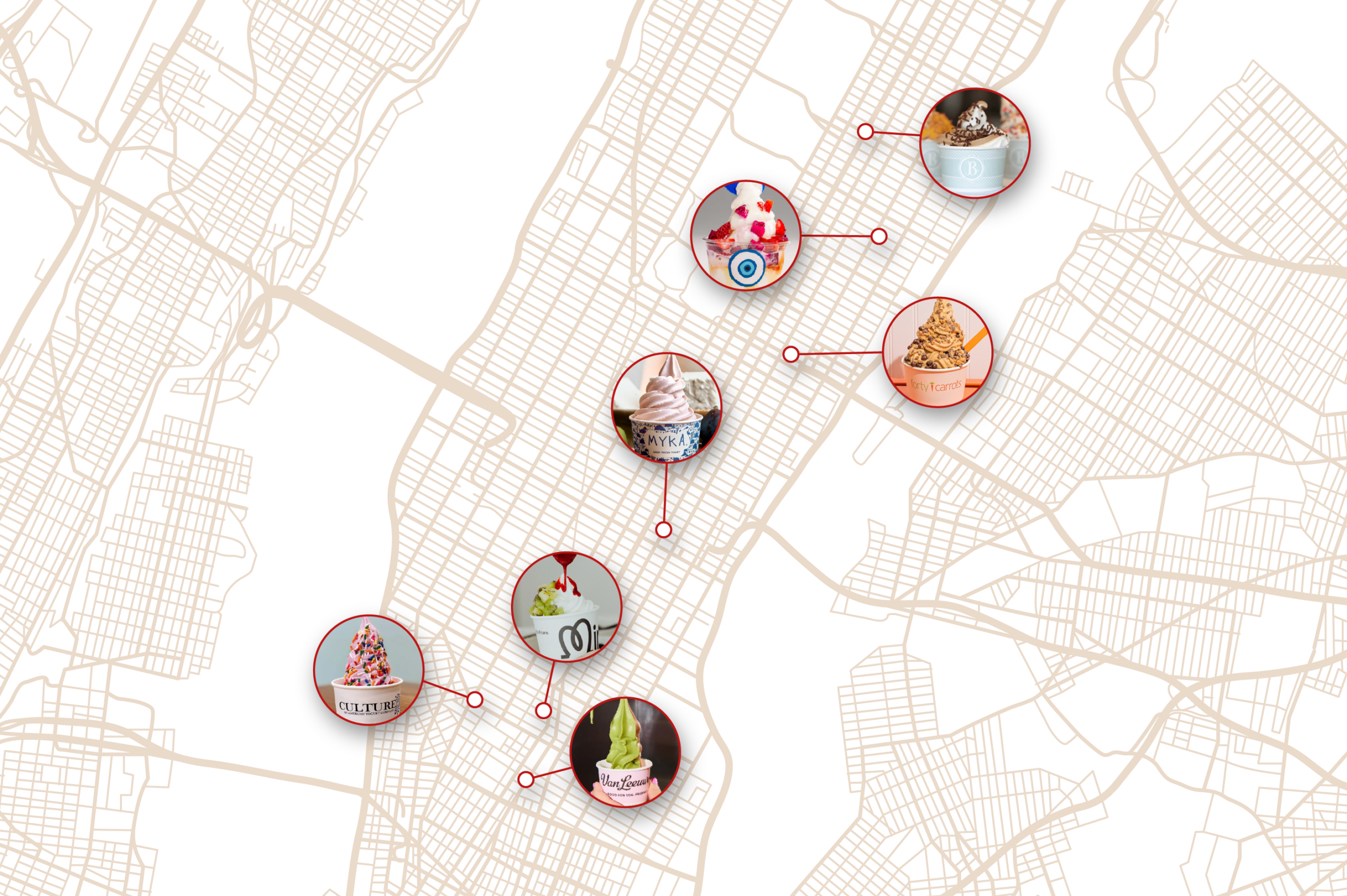
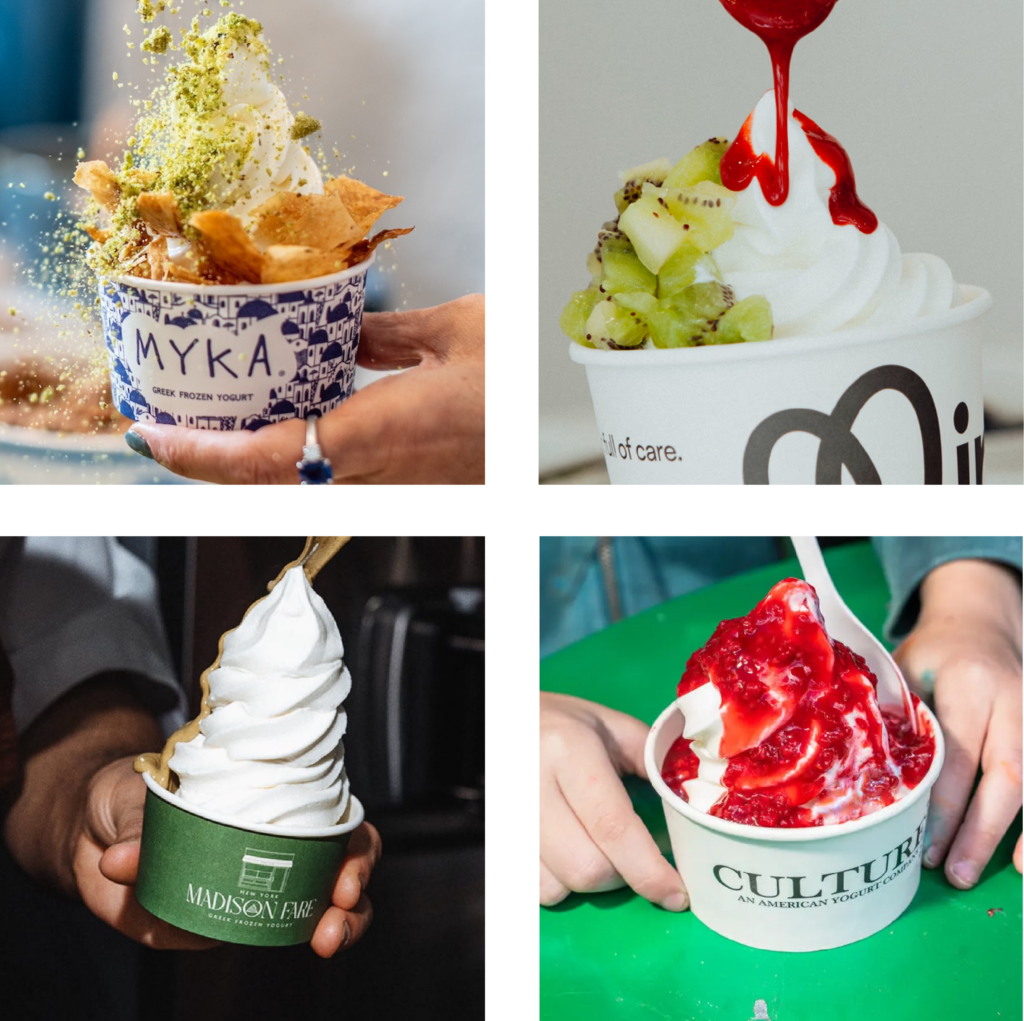
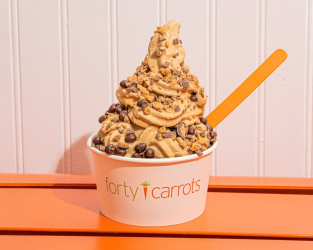
Forty Carrots (Bloomingdale’s) — “The OG,” $8/small 1000 Third Ave, New York, NY 10022
This is the one that started it all. Bloomingdale’s opened Forty Carrots in 1975 to give shoppers a low-calorie, health-conscious option, and it’s credited with introducing frozen yogurt to New York City in the first place: the original plain is low-fat, the flavored versions run no-fat, same as it’s always been. It’s tucked into the department store itself, which gives it a completely different rhythm from every other stop on this list: shoppers on a break, no line culture. Staff were friendly, the pour was generous for the price, and eight flavors were in rotation, more variety than we expected. It’s a nostalgic destination for anyone chasing the original, lighter side of the category.
Butterfield Market — “Best Grab-and-Go,” $7/small 1150 Madison Ave, New York, NY 10028
Butterfield is a beautiful, old-school Upper East Side food market first and a froyo stop second: the kind of place with a coffee bar, prepared foods, and a cheese counter, where the yogurt is one more thing you can grab on your way through. A lidded cup was a nice, practical touch for shoppers on the move, and the market itself is lovely to walk through.
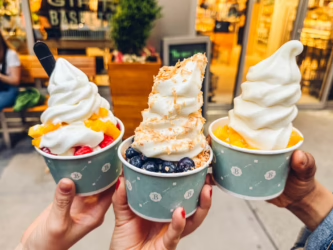
Madison Fare — “Most Instagrammable,” $9/small 1225 Madison Ave, New York, NY 10128
This one had real charm: a candy-shop energy and a toppings program that’s become well known, including a mango coulis and a pistachio-knafeh that reportedly went viral. Add matcha crumble, cardamom walnuts, yuzu granola, and honeycomb into the mix, and the menu offerings felt thoughtful and modern rather than a last-minute add-on, with a parfait-style layering build that photographed beautifully. It’s clearly aiming for a modern, shareable identity, and the branding backs that up.
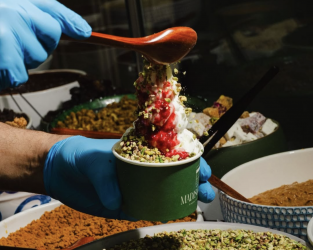
Gyro Project — “Unsung Gyro,” $8.50 1260 Lexington Ave, New York, NY 10028
Our sleeper hit. Frozen yogurt wasn’t even the headline (this is a gyro shop), but the dessert was exceptional and true to the brand around it. Their “deconstructed baklava” build (Greek honey, walnuts, cinnamon, and phyllo crisps over the Greek yogurt or vanilla soft serve) reads like a dessert menu written by people who actually cook, not a topping bar bolted on out of obligation; the classic version with olive oil and sea salt was just as considered. The manager came out to talk to us in their first week at this location. It felt like an experience we didn’t know we were going to get.
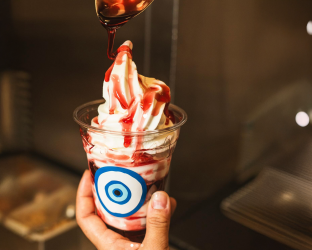
Mimis — Best Vibe, ~$13/small ($1.20/oz) 84 University Place, New York, NY 10003
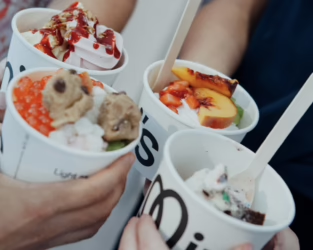
The most theatrical experience of the day: honey and olive oil dispensers, a self-serve topping bar stocked with bright fresh fruits, Italian pistachio sauce, , and , plus a shaker of wild fennel pollen for anyone feeling adventurous. Real attention to detail throughout. It’s easily the most shareable stop on the list, and it’s built for exactly that: the kind of place people plan a visit around, not just wander into.
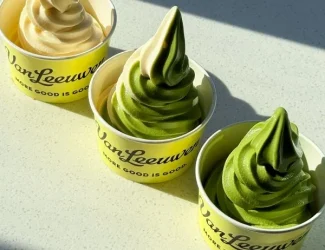
Van Leeuwen — Best Flavored Frozen Yogurt, $9.25 640 Broadway, New York, NY 10012
This is an ice cream shop first, with froyo as more of a secondary offering, and what they did with it was smart. A matcha that actually tasted like matcha, a passionfruit-and-tart combo that worked beautifully, mochi as a topping. The tart base itself was lighter and more refreshing than most of the day’s stops, and, even flavored, you could still taste the yogurt underneath.
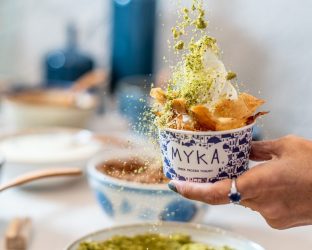
MYKA — Most True to Brand, $8.90 119 E 15th St, New York, NY 10003
A fully realized Greek/Mediterranean concept: the details, the toppings, the presentation all pointed the same direction, and for a few minutes it felt transportive. Baklava, “mykataifi” (pistachio cream with crisp kadayif), orange blossom honey, and a proper drizzle of olive oil made up the house specialty, and goji berries and fruit compotes rounded things out. As an exercise in brand consistency, it was one of the best examples of the day.
No stop was perfect, and honestly, we’d distrust a survey where every score came back a 90. Instead of calling out who fell short where, here are the patterns that separated the strong scores from the soft ones, the ones worth watching for in your own program:
“Health-first” showing up as absence, not balance. A few stops leaned on a low-fat or no-fat legacy, and it came through in the cup as light and watery rather than tart. Lower fat doesn’t have to mean lower flavor, but it often reads that way unless the base is built to compensate.
Froyo as an afterthought inside a bigger space. In a few spots, the counter was tucked into a larger market or retail footprint and hadn’t found its flow within it: more of an amenity than a destination. If froyo isn’t the main event, it still needs its own clear moment.
Branding that outran the buildout. More than one shop had beautiful branding that the physical space hadn’t caught up to yet. The gap showed up in the vibe more than the yogurt, but guests notice it immediately either way.
Ambitious menus without enough guardrails. Blending curated and build-your-own can work, but without a clear system it left a few guests unsure how to navigate the counter, even when the product itself was solid.
Atmosphere and toppings carrying a soft base. The most showstopping, most photographed stops weren’t always the best-tasting ones: a killer topping bar and great lighting can only do so much if the base underneath isn’t pulling its own weight.
Hype outrunning the flavor. A couple of stops arrived with real buzz behind them, and the execution played it safer than the branding promised. Consistency is key; consistency instead of any point of view is a missed opportunity.
That’s the thing about a “comeback” trend: it’s never really the format returning. It’s a bar getting reset. So, is the frozen yogurt movement here to stay? Yes. But the more useful finding is what’s driving it: there’s an enormous amount of open space in this category right now, and almost no wrong way to fill it, curated or self-serve, health-first or all-in on indulgence. The shops that scored lowest weren’t punished for their format. They were rated on the clarity behind the idea. The ones that scored highest all knew exactly what they were saying, and said it the same way in the branding, the base, and the toppings. That’s the real opportunity: not copying what’s working elsewhere, but building something with a point of view specific enough to be worth lining up for.
If there’s one common denominator across all eight stops, it’s this: customers can tell when the base, the tart specifically, wasn’t the priority. They may not use those words. They’ll just say the froyo “felt watery,” or “tasted low-fat,” or, worse, not say anything at all and not come back.
This is, unsurprisingly, the exact thing we obsess over at Itaberco. Our tart base is built to be dairy-forward without being heavy: rich, not too sweet, no film, a clean finish that holds up whether you’re running a self-serve topping bar or a full-service, fixed-price counter. It’s designed as a blank canvas: strong enough to stand completely on its own, but built to support whatever bells and whistles your concept calls for.
One gap stood out more than any other across all eight stops: In a category leaning this hard into premium, ingredient-forward positioning, that’s real, unclaimed territory for someone who wants it. It’s part of why we carry a dairy-free base alongside our traditional tart, so shops don’t have to leave that segment of their audience behind.
The stores that stood out to us were the ones being intentional: about service model, about branding, about what goes in the cup before anything gets added on top. That’s the same conversation we have with every partner who comes to us wanting to build something that doesn’t just chase the trend, but earns its place in it.
Book a call with our Sales team to talk through options and get started.
Book a call with our Culinary team for troubleshooting and menu development.
Book a call with our R&D team for custom development.
Wherever you start, we’ll tell you what we think, including where we’d push you to pivot, because that’s the kind of feedback that actually helps a concept stand out instead of blending in.